
How to Handle Morning Depression: Simple Steps to Start Your Day Better
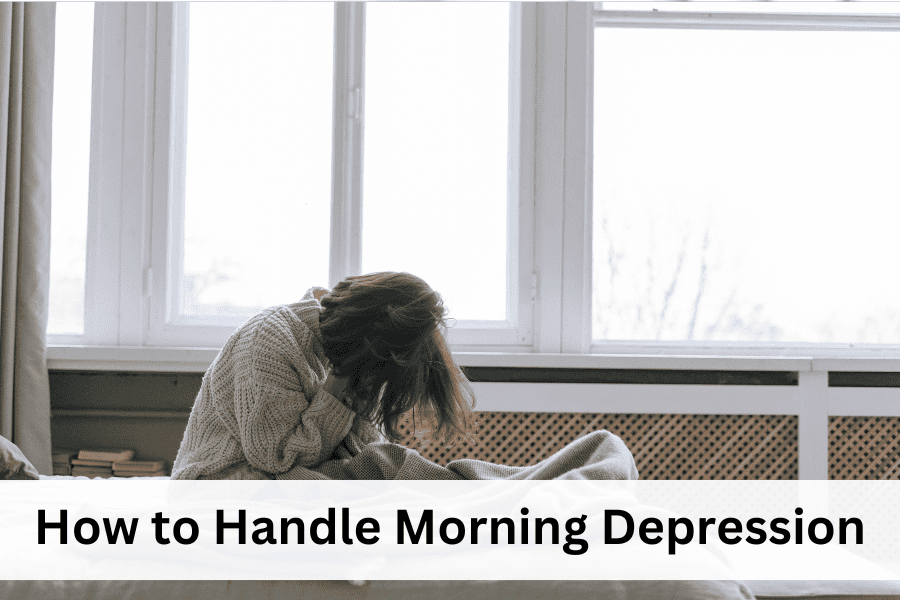
This morning I woke to a heavy, familiar weight: a sense of depression that made my chest tight and my thoughts small. In those first groggy moments, it’s easy to let the narrative take over—that sense that you’re failing somehow, that you should have all the answers, that you are somehow lesser for feeling this way. I have learned that those first reactions are not inevitable.
You can choose a different response, and doing so can change the tone of the entire day. If you’re reading this because you’ve experienced mornings like this, know this: you are not alone, and you can treat yourself in ways that are compassionate, practical, and courageous.
When the feeling first arrives, the most important thing to do is acknowledge it. Denying or pushing away emotions usually amplifies them. Instead, stop for a moment and name what you’re feeling. Tell yourself, silently or aloud, “I’m feeling depressed right now” or “I’m anxious and overwhelmed.” Naming isn’t a magic cure, but it creates distance—enough space that you’re not wholly fused with the emotion. This distance is the beginning of agency: the capacity to observe what is happening within you and then decide how you will respond.
From that place of gentle observation, ask a few straightforward, clarifying questions. These are simple tools to reframe the experience so it feels less like an avalanche and more like a weather pattern you can weather through. Ask yourself:
- What is this feeling about? Try to be specific. Is it tied to a particular event, relationship, decision, or fear of the unknown?
- What am I afraid might happen? Name the worst-case scenarios that show up.
- What is the likelihood that those worst-case outcomes will actually occur?
- If the worst did happen, could I survive it? What steps would I take?
These questions do a few useful things. First, they move you from vague, global suffering (“I feel terrible; everything is wrong”) to targeted concerns you can begin to address. Second, they help you calibrate fear. Often our imagined worst-case scenarios are improbable or manageable. Seeing that the real risk is smaller than the story your mind is telling you eases anxiety. Third, even if the worst does happen, rehearsing a response—“If X happens, I will do Y”—reduces helplessness. It shifts you from being a passive victim of emotions to an active problem-solver.
In my own morning, when I asked these questions I realized the feeling sprang from unfamiliar territory: a challenge I hadn’t faced before and the uncertainty of how to handle it. That edge of the unknown breeds vulnerability. Vulnerability is uncomfortable—no one likes feeling exposed or unsure—but it’s not a moral failing. It’s a human condition. Telling yourself, “It’s understandable I feel this way—this is new and uncertain”—is not weakness. It’s accurate, and it centers compassion rather than criticism.
Self-compassion is crucial here. So many of us respond to our own emotional distress with a harsh internal critic: “You should know better,” “You’re failing,” or “You’re too weak.” That kind of self-talk might temporarily drive you to action, but it corrodes long-term resilience. Instead, try a kinder inner voice: “It makes sense I’m scared; this is unfamiliar. I’m allowed to not have all the answers.” Saying things like, “It’s okay to be afraid” or “I’m doing the best I can” doesn’t let you off the hook for growth; it simply gives you a stable base from which to act. People who practice self-compassion tend to be more resilient and more willing to take necessary risks, because they know they won’t be crushed if things go imperfectly.
Another important point is separating feeling from identity. When you tell yourself, “I feel vulnerable,” avoid following it with “Therefore I am a failure.” Emotions are temporary states; they do not define you. The thought, “I don’t know how to handle this” can coexist with the more useful truth: “I am capable of learning how to handle this.” That perspective allows room for curiosity and experimentation. Rather than condemning yourself for not having immediate solutions, adopt the stance of a careful scientist: observe, hypothesize, test, learn, and adjust.
Practical steps matter, too. Once you’ve named the feeling, asked clarifying questions, and treated yourself with compassion, create a small, concrete plan. When we’re depressed or anxious, our capacity for large, ambitious tasks is diminished. That’s why a plan should focus on one or two manageable actions. These might include:
- Setting a tiny goal for the next hour (e.g., make a cup of tea, step outside for five minutes, send one brief message).
- Identifying one person you can reach out to for support or perspective.
- Writing down three possible responses to the feared scenario—then choosing the least stressful one to start with.
- Scheduling a time later in the day to reassess, so you don’t pressure yourself to fix everything now.
The point of tiny goals is twofold: they create forward motion, and they generate small wins. Each small success oxidizes the power of the depressive story and builds confidence. If you take one small step and it goes well, your brain updates its internal model: “When I act, things can get better.” If it doesn’t go perfectly, you still learn something useful.
It’s also helpful to remember that other people’s reactions are frequently less catastrophic than we imagine. In my own reflection, I realized that much of my fear involved anticipating the other’s reaction—what they might do.
Anticipatory worry often creates narratives that are harsher and more catastrophic than reality. You won’t know how someone may respond. They might even be motivated to act peacefully. Even if a person does react in a way you don’t like, you can do things to care for yourself in ways that bring you positive healing outcomes. You are capable of that.
Facing fear repeatedly, with compassion and practical steps, has cumulative effects. Each time you navigate a difficult situation without self-violence, you strengthen self-efficacy—the belief that you can handle what life throws at you. That belief is not abstract; it is built through lived experience.
Finally, cultivate rituals that make it easier to start the day differently when difficult emotions appear. These don’t need to be elaborate. A short breathing exercise, a handful of stretching movements, a simple journal prompt—“What would be a small kind thing I can do for myself today?”—can anchor you. Over time, these rituals form reliable pathways out of spirals. They don’t eliminate hardship, but they steady you.
To summarize the practical pathway: when a bad feeling arrives, pause and name it; respond with compassionate language; ask clarifying questions to reduce catastrophic thinking; create one or two small, manageable steps; reach out if you need support; and practice consistent rituals that help you start again. Repeat this process and let each small success build your confidence.
You are not your emotions. You are not a failure for feeling vulnerable. You are a person learning how to face uncertainty with curiosity, kindness, and steady action. The morning that once heralded helplessness can become an opportunity—an invitation to practice resilience, to learn more about what you need, and to build the kind of self-trust that endures. Take a breath, name the feeling, and take one kind, practical step. Over time, those steps add up, and you will find yourself braver and more capable than you thought.
If you’d like my support around dealing with life’s challenges, feel free to reach out to me at: coach.nancysy@gmail.com
This post has been about learning how to handle morning depression.
Other posts that you may like: