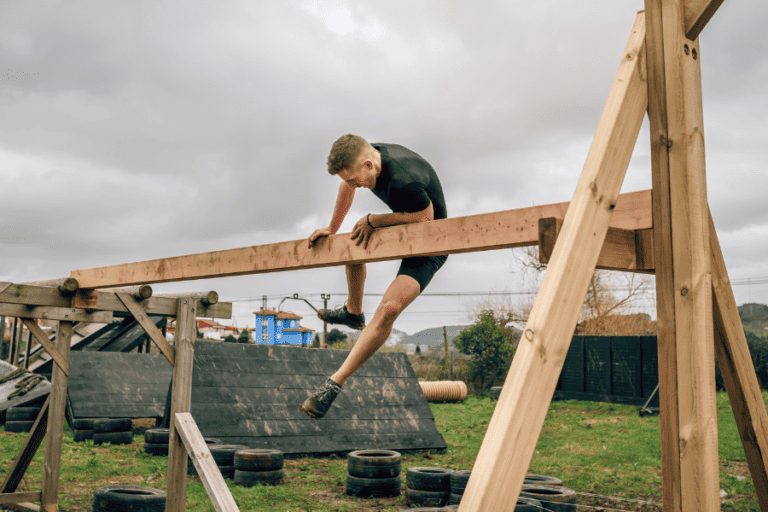
Stuck No More: Reframe, Experiment, and Rebuild Momentum
Not long ago I woke from a dream that left me thinking about what it truly means to be “stuck.” In the dream I found myself unable to move. Panic rose as the environment around me shifted into danger: I needed to move, to escape, to act. But my body felt heavy and inert, as if buried under some invisible weight. At one point, in the midst of that paralyzing fear, I pushed with everything I had—so hard that I flipped my body over, and in that motion the dream broke and I woke up, actually turning to one side in bed.
That instant between dream and waking felt like a lesson. If I could somehow move while trapped in a dream-state where I believed I couldn’t, what does that say about being stuck in waking life? Is being stuck an external condition, something imposed on us by the world, or is it a state of mind—ones and zeros in our mental software that tell us what we can and cannot do?
This question is worth lingering over. On its surface it’s almost a riddle: clearly there are physical constraints, real limits—health, resources, responsibilities—that can conspire to keep us from doing certain things. But beneath those obvious constraints lies a subtler layer: the beliefs and narratives we carry about ourselves and the world. Those narratives shape our perception of possibility and impossibility. They determine the actions we take, and crucially, the actions we withhold.
How much of what we call “stuck” is actually a product of these mental narratives? Consider the fear that stops you from applying for a new job, from telling someone how you feel, from starting a project, or from asking for help. Often the barrier is not a concrete impossibility; rather it is the belief that success is unlikely, or that you are undeserving or incompetent. If you accept the belief that something is not possible, you rarely take the steps—small or large—that could make it possible. In that way belief and inaction conspire to make the imagined impossibility a realized reality. It’s a self-fulfilling prophecy: we stop before we begin, and the world stays unchanged.
This isn’t merely philosophical musing. We see it reflected in countless everyday choices. A person might tell themselves, “I’m not creative enough to start writing,” and years pass without a single page. Another might say, “I’ll never be able to learn this skill at my age,” and never register for a class. If the mind insists something is impossible, the body tends to comply. What’s alarming is how subtle and pervasive these beliefs can be. They often live in the background of our consciousness and present as “realistic” assessments rather than as fragile stories we picked up somewhere along the way.
So how do we tell whether our stuckness is real or imagined? How do we test the boundaries between legitimate constraint and mental limit?
One way is to practice curiosity and experimentation. Think of a hypothesis you’ve been holding about your life—something like “I can’t change careers,” or “I’m not capable of healthy relationships,” or “I’ll never be financially secure.” Treat that thought like a scientific claim and run small experiments against it. If you think you can’t change careers, take one concrete step: speak to someone in the field, take a short course, or volunteer to do a project. If your belief is accurate, the experiment will quickly show you the scale and nature of the obstacles. If it’s inaccurate, you’ll start to discover ways forward that previously seemed invisible.
There’s a powerful advantage to this approach: it reframes the problem from an existential judgment—“I’m stuck”—to a neutral inquiry—“What happens if I try?” Small experiments are low-risk and high-feedback. They help us loosen the chokehold of catastrophic thinking and produce real information to guide our next move. Over time, these small acts of testing can erode the rigid stories we tell ourselves and build a new habit: the habit of trying things we once considered impossible.
Another lever for loosening stuckness is to examine the language we use with ourselves. Words matter. When you say, “I can’t,” the mind hears a closed door. When you say, “I haven’t yet,” the door becomes ajar. Tiny shifts in phrasing can change the trajectory of our actions. “I don’t have time” can sometimes be translated into “I’m not prioritizing this,” which realigns the problem to something actionable. “I’m not good at this” can become “I’m getting better,” inviting learning rather than resignation. Language is a tool for reshaping identity; we are what we repeat to ourselves.
A similar strategy is to notice the stories we inherit. Many of our limiting beliefs are not original; they are borrowed from parents, teachers, peers, or culture. “People like us don’t do that,” or “You need to be realistic,” can be parental or cultural messages that calcify into adult truth. Recognizing these beliefs as inherited rather than intrinsic can loosen their power. Ask: where did this belief come from? Is it someone else’s rule or mine? Does it hold up under scrutiny, or is it a comfort—somebody’s older, safer map of the world that I don’t have to accept?
Social context matters too. We are social creatures, and our communities influence what we see as possible. Surrounding yourself with people who model possibility—people who try and fail and try again—changes the baseline of your expectations. Conversely, being in an environment that normalizes resignation can keep you immobilized. That’s why deliberate community-building is a strategy for getting unstuck: seek mentors, peers, or groups where experimentation and growth are visible and encouraged. Even a single person who believes in your potential can create enough friction against defeatism to move you.
Let’s also consider the role of fear. Being stuck is often a fear-management problem disguised as a logistics problem. Fear of failure, fear of judgment, and fear of the unknown can make us overestimate risk and underestimate resilience. The thing about fear is that it is future-oriented; it imagines worst-case scenarios and congregates evidence to support them. One reliable trick is to calculate the realistic worst-case scenario and the next-best step. What is one small move you can make that would still be okay if it did not work? Framing actions as experiments reduces the stakes and makes the future less catastrophic. You don’t have to leap all the way; you can step.
Another helpful mindset is to separate identity from action. When people feel stuck, they often conflate who they are with what they can do. “I’m not a risk-taker” becomes a rule for life rather than a descriptive label. But identity is malleable. By taking small actions inconsistent with the limiting identity, you can start redefining yourself. If you act like a learner, even when you doubt it, you will begin to internalize learning as part of who you are. This is the psychological equivalent of rewiring a circuit: the more you do something, the more it feels normal.
There are also practical strategies to reduce the friction that sustains stuckness. Break big projects into micro-tasks. If a goal feels monstrous—like starting a business, finishing a book, or changing careers—reduce it to five-minute tasks. Often the inertia dissolves when the first tiny step is easy to take. Create rituals: designate a time of day for the work, remove distractions, and celebrate small wins. Structure scaffolds momentum. The key is that action feeds belief; the first tiny wins generate evidence that you are capable, and that evidence becomes psychological fuel.
But it would be dishonest to pretend that all stuckness is purely psychological. Some forms of stuckness are structural and require structural solutions. Systemic barriers—poverty, discrimination, lack of access—create real, concrete obstacles. Recognizing the psychological dimension should not be an excuse to blame individuals for conditions they cannot control. Instead, think of the psychological tools as additions to a toolkit that also includes advocacy, resource-building, and mutual support. When possible, combine internal work with external action: seek allies, access community resources, and advocate for systemic changes while continuing to experiment and push the edges of what seems possible.
Another way to think about being stuck is as a season rather than a permanent state. Seasons change. There are times for consolidation, times for learning, times for action, and times for rest. Being stuck might sometimes be a necessary pause for recalibration: a period where you gather information, heal, or rethink your strategy. What’s important is distinguishing a productive pause from a defensive freeze. A productive pause leads to different choices; a defensive freeze repeats patterns. The difference is often revealed by curiosity—if you remain inquisitive and willing to test, chances are you’re in a temporary pause. If you’ve resigned and shut down, you might be in a freeze.
Finally, consider cultivating an ethic of challenge—intentionally testing the boundaries of your perceived limits. What would happen if you identified five things you believe are impossible and, over the next year, tested them in incremental ways? The answers will be mixed: some beliefs may hold up, others will crumble. The point is not to prove yourself invincible; the point is to practice responsiveness and resilience. Challenge becomes a muscle: the more you use it, the more freedom you create.
So, are we really stuck? Sometimes yes, in a literal sense. But more often than we care to admit, being stuck is a layered phenomenon where mental habits and narratives amplify or even invent obstacles. The dream I woke from was a powerful metaphor: even when the mind says “can’t,” the body—or a deeper awareness—can surprise us with movement. If a dream-state paralysis can be overcome by an unexpected push, perhaps the wakeful paralysis of belief can be similarly loosened by deliberate action, curiosity, and small experiments.
The invitation here is not to adopt naive optimism but to cultivate pragmatic hope: hope that is tested and earned through incremental action. Begin with small experiments. Reframe the language you use about yourself. Question where your limiting beliefs came from. Build communities that model possibility. Break tasks into micro-steps. Distinguish pauses from freezes. And above all, practice challenging at least a few of the things you think are impossible.
You don’t have to flip yourself out of paralysis in one dramatic motion. Often the first movement is tiny—a conversation, a single paragraph written, a class enrolled in, a conversation initiated. These small acts often ripple outward, changing not just circumstances but the underlying sense of what’s possible.
If there’s one takeaway from the dream, it’s this: movement is possible even when everything in you says it isn’t. Your beliefs matter because they inform your actions. But beliefs are not immutable laws of nature; they’re habits that can be revised through steady, intentional practice. In time, the habit of challenging impossibility can transform a life that feels stuck into one that feels lived.
If you’d like my support around dealing with life’s challenges, feel free to reach out to me at: coach.nancysy@gmail.com
This post has been about learning how to get unstuck.
Other posts that you may like: