
Why the Way Someone Treats You Says Nothing About Who You Are.
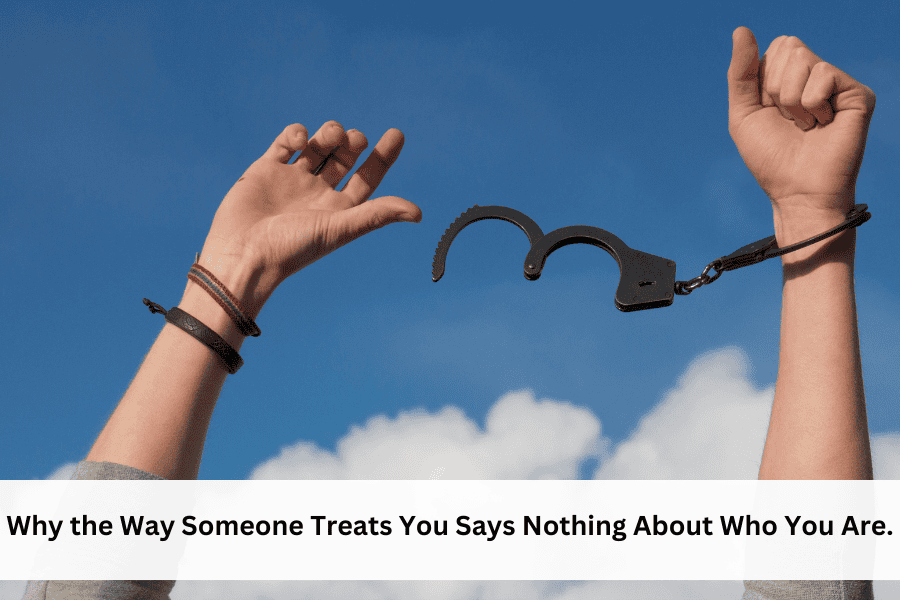
For much of my life, I was told I was “thin-skinned.” I’m not entirely convinced I’ve shed that habit completely, but I’m grateful to be learning otherwise. Over the years I’ve been fortunate to have teachers—people and life experiences—that encouraged me to question my reflexive reactions, examine my feelings, and take responsibility for my judgments.
Recently, however, it has been the practical wisdom of Stoic philosophers that has provided the clearest guidance. Their teachings didn’t simply help me survive a few difficult moments; they invited me to probe those moments and learn from them.
A few days ago I received an email that sparked the kind of visceral reaction I thought I had outgrown. My body heated up, my heart raced, and my stomach tightened. The words felt like a personal attack; I felt bullied, insulted, and deprived of my power.
The sender wasn’t a casual acquaintance but someone I’d been forced to engage with through business ties. Over time, her behavior had revealed itself to be abusive, manipulative, and dishonest. I had been trying to resolve the professional entanglement in a way that would release me from further contact, but the email felt like one more attempt to dominate or steal from me.
At first, the emotional response was straightforward: anger, hurt, and a sense of being diminished. A secondary, more corrosive belief followed quickly—if she could treat me like that, perhaps I was weak or undeserving. That’s the insidious part of mistreatment: it tempts us to internalize someone else’s toxicity as a reflection of our own value.
Often, this internal self-judgment happens in light speed, and we don’t even know we did it; we just feel terrible and don’t quite know why.
Stoic practice helped me make that distinction more sharply. Marcus Aurelius, Epictetus, and Seneca all teach a version of this principle: we do not control what others do, only how we interpret and respond. When someone acts selfishly, cruelly, or deceitfully, their behavior is an expression of their values and choices. It can hurt us and obstruct our aims, but it cannot change the truth of who we are unless we let it. That realization strips away the false meaning the pain tried to impose.
My immediate response to the email—pacing, feeling indignation, feeling powerless—was understandable and human. But the Stoic pause encouraged me to interrogate the story I was telling myself: “She is doing this because I was weak.” I challenged that narrative by listing evidence to the contrary: how I had treated her and others, the integrity I’d tried to bring to our business interactions, and the ways I had sought fair resolution. The conclusion was inevitable. Her cruelty reflected her choices, not my worth.
This reframing changed my next steps. Rather than letting her behavior define me or dictate my emotional life, I chose to act in ways that affirmed my values: to disengage strategically, to end the business relationship when appropriate, and to protect myself from further harm. Setting boundaries is not inconsistent with compassion; sometimes the kindest thing you can do for yourself and others is to remove yourself from a toxic dynamic. It’s also an act of clarity: you are refusing to accept someone else’s warped definition of you.
There is also gratitude in this process. It might seem strange to thank someone for behaving abusively, yet there is a lesson embedded in the encounter if you’re willing to look for it. Difficult people can act as mirrors, reflecting back the patterns you still need to notice and change. In my case, the discomfort forced me to sharpen my capacity to separate external actions from internal worth. It taught me to examine the reflexive stories I tell myself and to choose better interpretations. In that sense, the painful email was an education disguised as provocation.
One important caveat: understanding that someone’s bad behavior says nothing about your worth is not a prescription to tolerate abuse indefinitely. Recognizing the source of the problem doesn’t mean staying in a harmful situation out of misplaced compassion or guilt. It simply equips you to make decisions from a place of strength. I am moving to conclude our professional association because the relationship repeatedly crosses ethical and emotional boundaries I’m unwilling to accept. That decision is both practical and principled.
There is a broader social lesson here too. So often we allow the behavior of others to rewrite our self-narrative. A cutting remark from a colleague, an unfair dismissal from a manager, or an assault on social media can stick to us like tar if we assume those actions reveal our worth. The Stoic remedy is to distinguish between what belongs to us—our intentions, choices, and judgments—and what belongs to others—their choices, words, and actions. When we keep that distinction in view, we liberate ourselves from an unnecessary burden.
Practically, this means cultivating habits that reinforce our intrinsic value. Keep a record of your reliable actions, the ways you’ve shown up for others, and the moments you can be proud of. Surround yourself with people who reflect your values back to you. Practice self-talk that names facts rather than meanings: “She wrote a hurtful email” rather than “Did she do that because of something about me?” Over time, these small practices recombine into a resilient orientation to life.
Finally, remember that we all sometimes act poorly. Recognizing that someone else’s behavior is a statement about them, not you, doesn’t make you callous. It makes you wise. It allows you to offer compassion when appropriate and firmness when necessary. It helps you leave relationships that diminish your capacity to be who you want to be.
The email that once made my stomach turn ended up teaching me more than any amount of polite reflection could have. It forced me to practice the philosophical distinction between external events and inner worth. It reminded me to choose actions that align with my values—ending harmful business ties, protecting my peace, and learning from painful encounters rather than letting them define me. The lesson is simple but profound: other people’s negative behavior speaks to who they are, not who you are.
You can learn more about not letting others have power over your happiness by reading my most popular book: How to Not Care What Other People Think.
If you’d like my support around dealing with life’s challenges, feel free to reach out to me at: coach.nancysy@gmail.com
This post has been about why you need to learn not to let others’ harmful behaviors get to you.
Other posts that you may like: