One of the most valuable tools that I have taken from Stoic philosophy
One of the most valuable tools I have taken from Stoic philosophy is the practice of looking for what to learn in the midst of difficulty. Over the past months I’ve been tested by a person whose behavior has been both deeply troubling and unexpectedly instructive.
She is a tenant of mine who has shown a persistent lack of moral principle, a willingness to deceive, and — to my dismay — what feels like a real enjoyment in causing others pain. Managing her tenancy has been one of the hardest interpersonal challenges I’ve faced. Yet, through applying Stoic insights, I have found that the situation has also become one of the most productive and transformative experiences of my life.
When the conflict first surfaced, my reactions were immediate and raw. I flared up emotionally, responding in helplessness and frustration. I allowed the situation to dictate my mood and to consume my attention. My first reaction was to begin falling into depression.
My work suffered. My patience frayed with other people. I began to see that reacting from the same impulsive emotional center of my past pattern when dealing with an abusive person only deepened my turmoil.
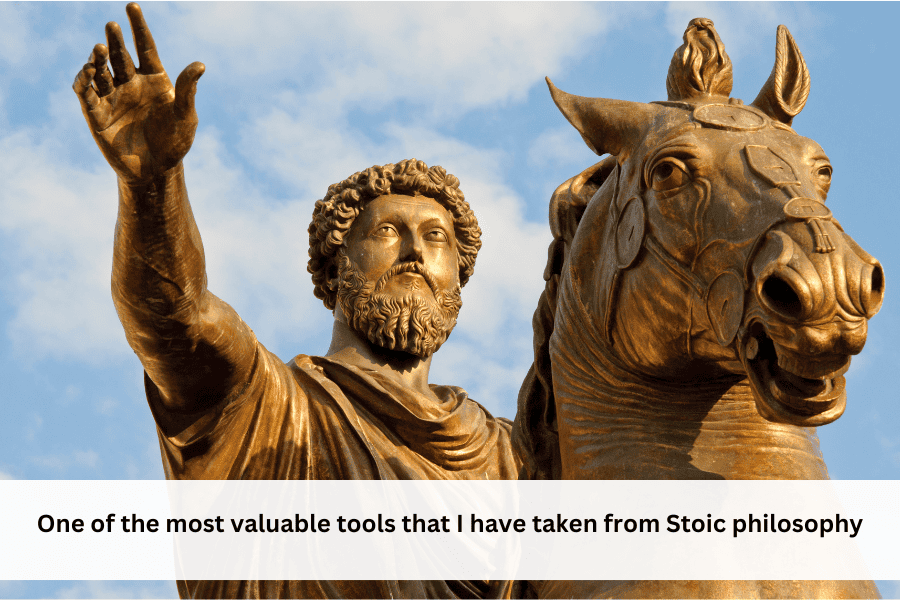
Then I recalled a line from Marcus Aurelius that has become a touchstone for me: “The impediment to action advances action. What stands in the way becomes the way.”
I reluctantly began asking. How could this obstacle advance action? How could her maliciousness become a path forward? But when I allowed the idea to settle, it reframed everything. Instead of seeing this tenant as an enemy whose sole purpose was to ruin my life, I started to see her as a catalyst: a persistent, inconvenient obstacle that could reveal what I needed to learn and force me to grow.
The shift did not happen overnight. It began with a deliberate pause — a minute or two to breathe, recollect, and choose a response rather than react. That tiny interval was powered by a Stoic habit: distinguishing between what I could control (my words, my actions, my attitude) and what I could not control (her choices, her intentions, her cruelty). Once I embraced that distinction, I began to make decisions that were strategic and constructive rather than reactive.
I focused on practical steps: documenting interactions carefully, setting firm but calm boundaries, and ensuring that all communications were clear and professional. I removed emotionally charged language that could be used against me and replaced it with measured, objective statements. This was not about suppressing feelings but about directing energy toward things that actually mattered.
More importantly, I started to view every difficulty as an opportunity to practice virtues that Stoicism values: patience, courage, justice, and wisdom. Where the tenant sought to provoke, I practiced restraint. Where she tried to manipulate, I practiced clarity and fairness. When her behavior felt sadistic, I reminded myself who she is and the fact that what she does has nothing to do with me.
The results surprised me. Not only did I begin to resolve practical issues more efficiently — eviction logistics, property restoration, legal documentation — but I also experienced personal growth that reached into other areas of my life. The discipline of responding thoughtfully to provocation spilled over into my work, where I became more decisive and composed during stressful projects.
In short, the obstacle that once felt like an attack became a training ground.
There were setbacks. Old habits returned at times: bursts of worry and anxiety. Each time I stumbled, I treated the failure as data, not as a moral catastrophe. Stoic technique allowed me to examine what triggered me and to tweak my approach. Sometimes I needed to seek advice from trusted friends or professionals; sometimes I needed to rest and regroup. The path was iterative, and progress was uneven. Yet gradually, my default response shifted toward strategic action.
Perhaps the most unexpected gift of this ordeal has been the expansion of my sense of self-efficacy. Confronting someone who seemed to have few scruples forced me to clarify my own principles. It taught me how to assert those principles calmly and effectively. I discovered strengths I didn’t know I had: an ability to remain principled under pressure, an aptitude for clear documentation and process, and a capacity for steady leadership in messy, emotional situations. These are not abstract virtues; they are practical competencies that have value in professional and personal contexts alike.
I also learned an important lesson about narrative. It’s easy to cast oneself as the perpetual victim of another person’s malice and, in doing so, to become trapped in a story with no end. Stoicism helped me rewrite the narrative. Instead of saying, “She is ruining my life,” I started telling myself, “This situation is revealing what I need to learn.” That narrative change altered my internal landscape. It turned bitterness into curiosity and despair into a project. Learning to see difficulty as pedagogy — as a teacher rather than a tormentor — has been liberating.
Even as the tenancy is winding down and the practical matters near resolution, the challenge hasn’t fully disappeared.
Dealing with a person who lacks moral restraint continues to be painful at times. But the pain is less paralyzing and more instructive. I can observe my reactions, calibrate them, and choose a better path. I’m still processing the fallout and making repairs where needed, but I do so with a steadier hand.
If I hadn’t been exposed to Stoic philosophy, I believe the outcome would have been very different. My past self would have suffered more emotionally, made poorer decisions, and missed opportunities for growth. Instead, the wisdom I’ve absorbed — especially the insight that obstacles become the way — turned a toxic relationship into a crucible for character and competence. It doesn’t make the experience pleasurable or morally acceptable. It merely offers a reliable framework for extracting value from a painful circumstance.
To anyone facing a similarly difficult person or situation, my counsel is simple: don’t try to mimic their tactics. Don’t allow their chaos to become your chaos.
Pause, take control of what you can control, and ask: What is this situation trying to teach me? What habits do I need to build? Which virtues do I need to practice? Approach the obstacle as a teacher, not an enemy, and you may find that it has something invaluable to offer.
You can turn the impediment into your way forward.
If you’d like my support around dealing with life’s challenges, feel free to reach out to me at: coach.nancysy@gmail.com
This post has been about how I use a powerful life tool from Stoic Philosophy.
Other posts that you may like: